
# Crypto Casinos vs. Traditional Online Casinos: A Complete Comparison
The rise of cryptocurrency has revolutionized online gambling, creating a distinct category of crypto casinos alongside traditional online casinos. While both offer internet-based gambling, they differ significantly in payment methods, transaction speed, anonymity, fees, and regulatory approaches. This comprehensive comparison examines crypto casinos versus traditional online casinos across all critical factors, helping you determine which option best suits your gambling preferences and priorities.

Understanding the Two Casino Types
Traditional Online Casinos
Traditional online casinos accept conventional payment methods:
Payment Methods:
- Credit and debit cards (Visa, Mastercard)
- Bank transfers and wire transfers
- E-wallets (PayPal, Skrill, Neteller)
- Prepaid cards (Paysafecard)
- Fiat currency gambling (USD, EUR, GBP, etc.)
- Comprehensive KYC verification required
- Regulated by gambling authorities
- Established since late 1990s
- Familiar banking processes
Crypto Casinos
Crypto casinos accept cryptocurrency as primary or exclusive payment method:
Payment Methods:
- Bitcoin (BTC)
- Ethereum (ETH)
- Litecoin (LTC)
- Other cryptocurrencies (USDT, BCH, DOGE, etc.)
- Cryptocurrency gambling
- Minimal or no KYC verification
- Often offshore licensed
- Emerged prominently in 2010s
- Blockchain-based transactions
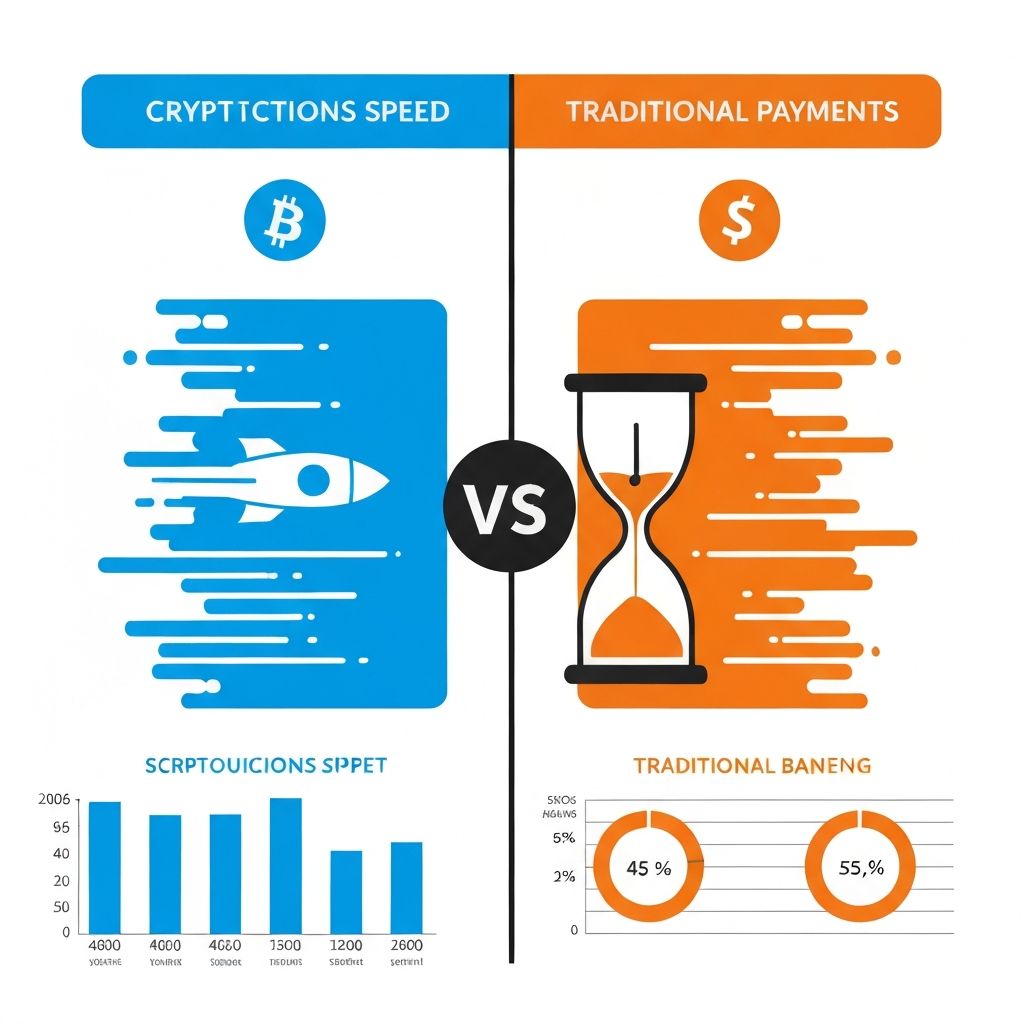
Transaction Speed Comparison
Transaction speed significantly impacts user experience, especially regarding withdrawals.
Deposit Speed
Crypto Casinos:
- Processing Time: 10-30 minutes (blockchain confirmations)
- Factors: Depends on blockchain congestion and confirmation requirements
- Typical Confirmations: 1-6 confirmations depending on cryptocurrency
- Instant Play: Some casinos credit deposits after 1 confirmation
- Speed by Crypto: Litecoin and Dogecoin faster than Bitcoin
- Credit/Debit Cards: Instant
- E-Wallets: Instant
- Bank Transfers: 1-5 business days
- Prepaid Cards: Instant
Withdrawal Speed
Crypto Casinos:
- Processing Time: 0-2 hours typically
- Fast Track: Some offer instant withdrawals
- Blockchain Confirmation: Additional 10-60 minutes
- Total Time: Usually under 2 hours from request to wallet
- No Pending Periods: Many process immediately
- E-Wallets: 0-24 hours (best case)
- Credit/Debit Cards: 3-5 business days
- Bank Transfers: 3-7 business days
- Pending Periods: 24-72 hours common before processing begins
Why Speed Differences Exist
Crypto Speed Advantages:
- No intermediary banks or payment processors
- Automated blockchain transactions
- No manual review requirements (for verified users)
- 24/7 processing regardless of banking hours
- Direct wallet-to-wallet transfers
- Banking system business hours
- Payment processor delays
- Anti-fraud verification checks
- Manual finance team reviews
- Multiple intermediaries in transaction chain

Privacy and Anonymity
Privacy consciousness drives many players toward crypto casinos.
Crypto Casino Privacy
Minimal KYC Requirements:
- Many require only email and username
- No identity verification for deposits/play
- Verification only for large withdrawals (if at all)
- Some offer completely anonymous play
- Blockchain addresses don't reveal identity
- Casino transactions don't appear on bank statements
- Payments show only blockchain addresses
- No direct link between gambling and personal banking
- Privacy coins (Monero, Zcash) offer enhanced anonymity
- Minimal personal information stored
- No bank account details on file
- Reduced identity theft risk
- Less marketing data collection
Traditional Casino Privacy
Comprehensive KYC Required:
- Government-issued ID verification
- Proof of address documentation
- Payment method verification
- Utility bills or bank statements
- Sometimes source of wealth documentation
- Casino transactions appear on bank/card statements
- E-wallet records show gambling activity
- Complete transaction history maintained
- Financial institutions aware of gambling
- Extensive personal information stored
- Financial account details on file
- Address and contact information
- Play history and preferences tracked
Regulatory Perspective
Privacy Trade-offs:
- Traditional casino KYC prevents money laundering and underage gambling
- Crypto casino privacy enables illicit activity potential
- Regulators increasingly requiring crypto casino verification
- Privacy vs. protection balance ongoing debate
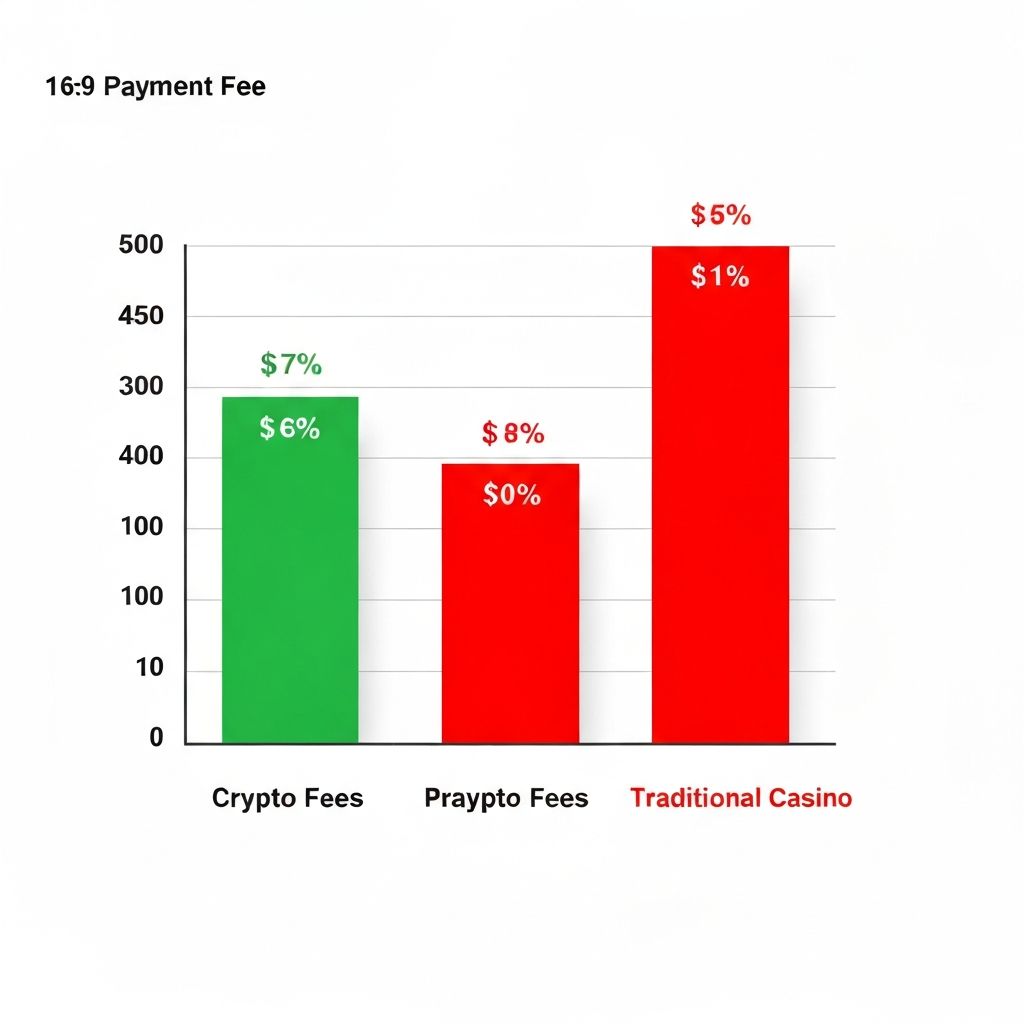
Fees and Costs
Transaction fees impact your gambling bankroll significantly.
Crypto Casino Fees
Deposit Fees:
- Casino Fees: Usually free
- Blockchain Network Fees: $0.50-$5 typically (varies by cryptocurrency)
- Wallet Fees: Depends on wallet provider
- Exchange Fees: If converting fiat to crypto first
- Casino Fees: Often free or minimal ($1-$5)
- Blockchain Network Fees: Covered by casino or player (varies)
- No Intermediary Fees: Direct blockchain transactions
- No conversion if playing in cryptocurrency
- Exchange rate spreads if converting to/from fiat
- Potential volatility costs between deposit and withdrawal
Traditional Casino Fees
Deposit Fees:
- Credit/Debit Cards: Often free, sometimes 2-5%
- E-Wallets: Usually free for deposits
- Bank Transfers: $15-$50 for wire transfers
- Currency Conversion: 2-4% for foreign currency
- E-Wallets: Free to $5
- Credit/Debit Cards: Free to 2-5%
- Bank Transfers: $15-$50
- Currency Conversion: 2-4%
- Withdrawal to Card/Bank Limit: Above free threshold, fees apply
Fee Reduction Strategies
Crypto:
- Use low-fee cryptocurrencies (Litecoin, Dogecoin)
- Withdraw during low network congestion
- Check if casino covers blockchain fees
- Use stablecoins to avoid volatility
- Use e-wallets for fastest, cheapest withdrawals
- Avoid credit card cash advance fees
- Minimize currency conversions
- Combine small balances to exceed fee-free minimums
Accessibility and Geographic Restrictions
Cryptocurrency's borderless nature affects casino accessibility.
Crypto Casino Accessibility
Geographic Advantages:
- Accessible from most countries
- No bank-imposed gambling blocks
- Bypass restrictive banking regulations
- Uniform experience regardless of location
- No currency conversion needed
- Works where traditional banking restricts gambling
- Accessible in countries with strict gambling laws (risk of local law violations)
- No payment processor restrictions
- Available 24/7 regardless of banking hours
- Some jurisdictions explicitly ban crypto gambling
- IP blocking in certain countries
- VPN usage common but often against terms
- Licensing may restrict specific countries
Traditional Casino Accessibility
Geographic Limitations:
- Licensed for specific jurisdictions
- Banking blocks in gambling-restricted countries
- Payment processors declining gambling transactions
- Currency support limited by casino
- Regional payment method availability varies
- Clear legal status in licensed jurisdictions
- Geo-blocking prevents access from restricted countries
- Compliance with local gambling laws
- Consumer protections in regulated markets
Security and Safety
Security encompasses technical protections and regulatory oversight.
Crypto Casino Security
Technical Security:
- Blockchain Transparency: Provably fair gaming verification
- Irreversible Transactions: No chargeback fraud
- Encryption: SSL and blockchain-level security
- Decentralization: Some casinos operate on decentralized platforms
- Wallet Security: Player responsible for private key security
- Irreversibility: No dispute resolution for mistakes
- Regulatory Gaps: Less oversight than traditional casinos
- Scam Potential: Easier to establish and disappear
- Cryptographic verification of game fairness
- Players can verify each bet outcome
- Transparency unavailable at traditional casinos
- Growing standard in crypto gambling
Traditional Casino Security
Technical Security:
- SSL Encryption: Industry-standard data protection
- PCI Compliance: Payment card security standards
- Independent Auditing: eCOGRA, iTech Labs, GLI certification
- Chargeback Protection: Dispute resolution for unauthorized transactions
- Licensing Requirements: Stringent operational standards
- Financial Audits: Regular solvency checks
- Player Fund Segregation: Protected from operational funds
- Dispute Resolution: Regulatory complaint mechanisms
- Data Breaches: Extensive personal data stored
- Identity Theft: Risk from information compromise
- Bonus Abuse: Complex terms enable exploitation
Bonuses and Promotions
Bonus structures differ significantly between casino types.
Crypto Casino Bonuses
Common Offers:
- Welcome Bonuses: Often larger (200-300%+ matches)
- Deposit Bonuses: Cryptocurrency-specific promotions
- No Deposit Bonuses: Free crypto for registration
- Cashback: Often higher percentages
- VIP Programs: Crypto-exclusive tiers and rewards
- Often lower than traditional casinos (25x-35x)
- Some offer wager-free bonuses
- Crypto-specific terms and conditions
- More generous bonus amounts
- Lower wagering requirements
- Faster bonus clearance due to transaction speed
- Innovative promotion types (rain, contests, provably fair lottery)
Traditional Casino Bonuses
Common Offers:
- Welcome Bonuses: 100-200% deposit matches typical
- Free Spins: Slots-focused promotions
- Reload Bonuses: Ongoing deposit incentives
- Cashback: Standard percentage returns
- VIP Programs: Tiered loyalty rewards
- Typically 30x-50x
- Complex game contribution percentages
- Maximum bet restrictions
- Time limits (30-90 days)
- Well-established bonus structures
- Clear regulatory frameworks
- Payment method bonuses (e.g., PayPal exclusions)
- Familiar bonus concepts
Game Selection and Providers
Game variety and provider quality vary between casino types.
Crypto Casino Games
Game Selection:
- In-House Games: Many develop proprietary provably fair games
- Licensed Slots: Growing library from major providers
- Blockchain Games: Unique decentralized gaming options
- Dice Games: Popular simple betting games
- Specialty: Crash, plinko, mines, and other crypto-specific games
- Evolution Gaming (live dealer)
- Pragmatic Play
- NetEnt
- Play'n GO
- Plus in-house developed games
- Unique to crypto casinos
- Cryptographic verification
- Transparency unavailable elsewhere
Traditional Casino Games
Game Selection:
- Extensive Slots: Thousands of titles
- Table Games: Comprehensive blackjack, roulette, baccarat varieties
- Live Dealer: Premium studios and multiple tables
- Progressive Jackpots: Mega Moolah, Divine Fortune, etc.
- Branded Games: Movie/TV show licensed slots
- All major providers: Microgaming, NetEnt, Playtech, Evolution, Pragmatic Play
- Exclusive partnerships common
- Largest game libraries
Regulation and Legal Status
Regulatory frameworks differ dramatically.
Crypto Casino Regulation
Licensing:
- Often Curacao eGaming licensed
- Some hold MGA or other reputable licenses
- Many operate without traditional gambling licenses
- Regulatory gray area in many jurisdictions
- Variable depending on license
- Often less comprehensive than traditional casinos
- Dispute resolution limited
- Self-regulation common
- Crypto gambling illegal in some jurisdictions
- Players may violate local laws
- Uncertain tax implications
- Regulatory landscape evolving
Traditional Casino Regulation
Licensing:
- MGA, UKGC, Curacao, and other established authorities
- Stringent licensing requirements
- Regular compliance audits
- Clear legal framework
- Comprehensive dispute resolution
- Mandatory responsible gambling tools
- Financial protection requirements
- Clear terms and conditions standards
- Well-defined legal status
- Tax reporting requirements clear
- Consumer protections established
- Recourse mechanisms available
Which Casino Type is Right for You?
Choose Crypto Casinos If You:
✅ Prioritize Privacy: Minimal personal information sharing ✅ Want Fast Withdrawals: Hours instead of days ✅ Prefer Lower Fees: Minimal transaction costs ✅ Value Transparency: Provably fair gaming verification ✅ Are Crypto-Savvy: Comfortable managing cryptocurrency ✅ Need International Access: Bypass banking restrictions ✅ Want Better Bonuses: Higher match percentages, lower wagering
Choose Traditional Casinos If You:
✅ Want Regulatory Protection: Licensed, audited, regulated operations ✅ Prefer Familiar Banking: Credit cards, e-wallets, bank transfers ✅ Need Legal Clarity: Clear legal status and consumer protections ✅ Want Largest Game Selection: Thousands of slots and table games ✅ Value Dispute Resolution: Regulatory complaint mechanisms ✅ Avoid Crypto Complexity: No need to manage cryptocurrency ✅ Prefer Stable Currency: No cryptocurrency volatility
Frequently Asked Questions
Are crypto casinos legal?
Legality varies by jurisdiction. Crypto casinos operate in regulatory gray areas in many countries. Some jurisdictions explicitly allow crypto gambling, others ban it, and many have unclear laws. Players should research local regulations before using crypto casinos.
Are crypto casinos safer than traditional casinos?
Neither is universally safer. Crypto casinos offer technical transparency (provably fair games) and transactional security but often lack regulatory oversight. Traditional casinos provide regulatory protections and dispute resolution but store more personal data. Safety depends on specific casino reputation and licensing.
Can I play at both crypto and traditional casinos?
Yes, you can use both types. Many players maintain accounts at both crypto and traditional casinos to enjoy advantages of each. Some hybrid casinos accept both cryptocurrency and traditional payments, offering maximum flexibility.
Do crypto casinos have better bonuses?
Generally yes. Crypto casinos typically offer larger bonus percentages (200-300%+ vs. 100-200%), lower wagering requirements (25x-35x vs. 30x-50x), and more frequent promotions. However, traditional casinos may offer more established loyalty programs and clearer bonus terms.
How do I convert my crypto winnings to cash?
Withdraw cryptocurrency from the casino to your wallet, then sell on a cryptocurrency exchange (Coinbase, Kraken, Binance) for fiat currency. Transfer fiat from exchange to your bank account. Process takes 1-3 days typically. Some exchanges offer instant bank transfers.
Are withdrawals really faster at crypto casinos?
Yes, significantly faster. Crypto casino withdrawals typically process within 0-2 hours plus blockchain confirmation time. Traditional casino e-wallet withdrawals take 0-24 hours, while cards and bank transfers require 3-7 business days. Crypto offers the fastest withdrawal experience.
Do I need to verify my identity at crypto casinos?
Requirements vary. Many crypto casinos don't require KYC verification for deposits and small withdrawals. However, large withdrawals often trigger verification requests. Some crypto casinos now implement full KYC due to regulatory pressure. Always check specific casino policies.
Can I use a VPN to access crypto casinos?
Many players use VPNs to access crypto casinos, but this often violates casino terms and conditions. Casinos may confiscate winnings if VPN usage is detected. Some crypto casinos explicitly allow VPNs, while others ban them. Check terms before playing with a VPN.
Conclusion: Making Your Choice
Crypto casinos and traditional online casinos each offer distinct advantages. Crypto casinos excel in transaction speed, privacy, low fees, and bonus generosity, appealing to cryptocurrency enthusiasts and privacy-conscious players. Traditional casinos provide established regulatory frameworks, comprehensive game libraries, legal clarity, and consumer protections, suiting players prioritizing safety and familiarity.
Neither option is universally superior—the best choice depends on your priorities, technical comfort level, and local regulations. Many experienced gamblers use both types: crypto casinos for fast withdrawals and privacy, traditional casinos for regulated gaming and extensive game selection.
Research specific casinos thoroughly regardless of type, verify licenses, read reviews, and start with small deposits to test reliability before committing significant funds. The online gambling landscape continues evolving, with crypto casinos gaining legitimacy and traditional casinos adopting cryptocurrency options, potentially blurring distinctions between the two in coming years.